Music History
A Genre-Defying Ballad That Lives Between Rock, Gospel, And Something Else Entirely
Some songs are written for the charts. Others are written for the stage. And then there are songs like “Purple Rain” by Prince and the Revolution — songs that feel less like recordings and more like emotional events. It is one of those rare pieces of music that doesn’t just tell a story, but seems to become the story, expanding far beyond its runtime into something almost cinematic, spiritual, and larger than life.
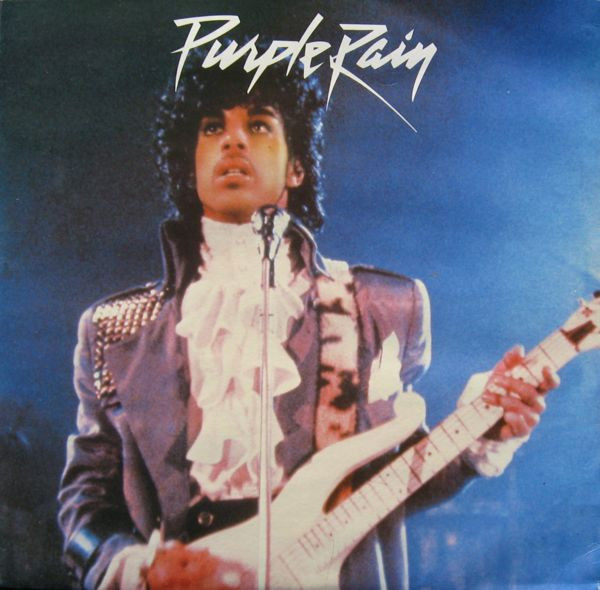
“Purple Rain” was released in 1984 as the centerpiece of both the album and film Purple Rain, a project that would define Prince’s career and permanently reshape pop and rock music. But the song itself didn’t begin as a grand artistic statement. It started as a challenge.
During the 1999 tour in 1983, Prince found himself sharing arenas with artists like Bob Seger, and he pushed himself to write something in the emotional territory of a classic rock ballad — something grounded, heartfelt, and universal. What emerged, however, became something far more expansive than imitation. It became transformation.
Instead of simply writing a “Seger-style” ballad, Prince created something that blended seemingly incompatible worlds. As members of The Revolution later described, the song felt like it was constantly shifting shapes during its creation.
It was part rock anthem, part gospel plea, part country-style reflection, and part emotional confession. That instability is exactly what gives “Purple Rain” its power. It refuses to settle into a single identity, mirroring the emotional confusion and intensity at its core.
At its heart, the song is about love, trust, regret, and spiritual searching — themes that feel simple on paper but become overwhelming in execution. The lyrics suggest a relationship reaching its breaking point, but they also hint at something larger: a longing for forgiveness, understanding, and peace in a world that feels emotionally complicated and unstable.
The “purple rain” itself becomes a symbol that is never fully explained, allowing it to function more like a feeling than a literal concept.

One of the most remarkable aspects of the song is that the version most people know is not a carefully constructed studio track in the traditional sense. Instead, it is built from a live recording captured in 1983, later refined and shaped into its final form. That decision alone gives the song a rawness that is rarely heard in major rock productions. You can feel the presence of the audience, the space of the performance, and the immediacy of the moment it was created.
Prince’s approach to performance was never static, and “Purple Rain” reflects that completely. Rather than treating it as a fixed composition, he allowed it to evolve over time. The song became a living piece of music, stretching and expanding depending on the moment, the audience, and his emotional state. That fluidity is one of the reasons it feels so alive even decades later.
When the film Purple Rain was released, the song gained an entirely new dimension. It was no longer just a recording — it became the emotional climax of a narrative about struggle, identity, and artistic survival. Within that context, the song felt almost like a final statement, a release of everything the character had been carrying. But even outside the film, it stood powerfully on its own as a universal expression of emotional intensity.
Perhaps the most famous element of “Purple Rain” is its soaring guitar solo, a moment that feels less like technical performance and more like emotional eruption. As the song builds, Prince’s guitar playing becomes increasingly expressive, stretching beyond melody into something closer to vocal expression. It doesn’t simply decorate the song — it translates it. By the time the solo reaches its peak, it feels as though words are no longer enough.
Live performances pushed that energy even further. In later concerts and filmed performances, including the legendary Prince and the Revolution: Live recording, the song was extended into long, immersive experiences that could stretch nearly 20 minutes.
Each performance was different, shaped by improvisation, audience response, and Prince’s own instinct in the moment. Rather than diminishing the song, these expansions deepened its emotional impact, turning it into something closer to a ritual than a pop performance.
What makes “Purple Rain” endure is not just its musical brilliance, but its emotional openness. It does not give listeners a simple message or a clear resolution. Instead, it exists in a space between sadness and hope, between collapse and transcendence.
That ambiguity is what allows it to resonate so deeply. It meets listeners wherever they are emotionally and reflects something back that feels personal, even intimate.
Over time, the song has become inseparable from Prince’s legacy. It represents not just his talent as a musician, but his ability to merge genres, emotions, and performance styles into something entirely his own. Few artists have ever created a piece of music that feels so complete, so layered, and yet so endlessly expandable.
Today, “Purple Rain” stands as one of the defining songs of the 1980s and one of the greatest recordings in popular music history. It is played at memorials, celebrated in concerts, and rediscovered by new generations who continue to find meaning in its shifting emotional landscape.
Because at its core, it isn’t just a song about love or loss.
It is a song about everything that happens when those feelings become too large to contain — and spill into something bigger than life itself.
