Music History
A Song That Questions Reality Itself — How Talking Heads Turned “Once in a Lifetime” Into A Surreal Anthem Of Modern Life
Some songs tell stories. Others express emotions. But a rare few do something stranger — they hold up a mirror and ask the listener to question the life they’re living in real time. “Once in a Lifetime” by Talking Heads is one of those songs, a surreal, hypnotic track that turns everyday existence into something both absurd and deeply revealing.
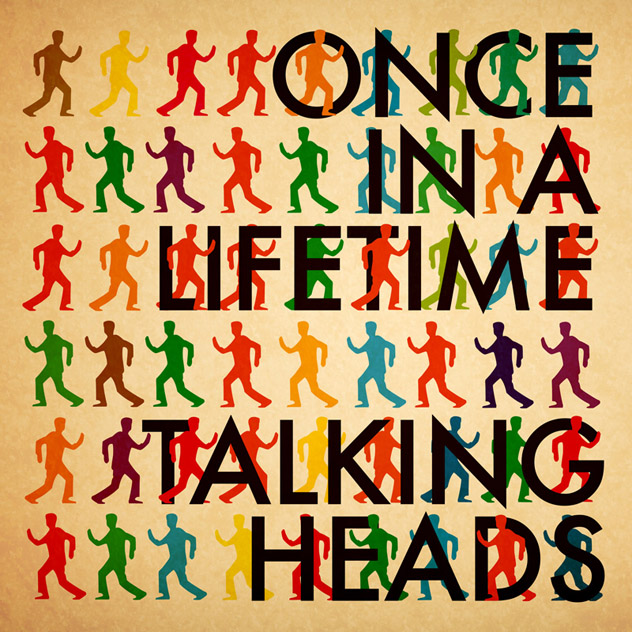
The song emerged during the sessions for Remain in Light, an album shaped by Afro-funk rhythms, dense layering, and experimental production techniques. The band had relocated to Compass Point Studios in the Bahamas, where ideas were built through extended jams rather than traditional songwriting. In that environment, “Once in a Lifetime” began not as a fully formed composition, but as a loose, evolving idea struggling to find direction.
Even producer and co-writer Brian Eno initially doubted the song’s potential. At one stage, he considered abandoning it entirely, unsure of how its scattered pieces could be brought together. The structure felt unstable, the lyrical direction unclear, and the arrangement still searching for coherence. It seemed like one of those experiments that might never resolve into something finished.
The turning point came when David Byrne began shaping what would become the song’s defining vocal approach. Instead of singing in a traditional sense, Byrne started delivering lines as a kind of spoken, trance-like monologue — half sermon, half internal dialogue. His tone shifted between urgency and detachment, as if he were both inside and outside the moment at once.

That performance changed everything. The fragmented structure suddenly gained focus, anchored by Byrne’s rhythmic, almost evangelical delivery of phrases like “Same as it ever was.” What had once felt like an unfinished jam became something precise and unsettling — a meditation on routine, identity, and the strange feeling of living on autopilot.
Lyrically, the song explores a deceptively simple question: how do people end up living the lives they live without fully noticing the path they took to get there? Byrne has described the idea as a reflection on unconscious living — the way people move through careers, relationships, and routines without ever pausing to examine how those structures formed.
That concept is delivered not through linear storytelling, but through repetition, fragmentation, and surreal imagery. The lyrics feel like thoughts arriving in no particular order, mirroring the disorientation of someone suddenly becoming aware of their own habits. It is less a narrative and more a state of mind.
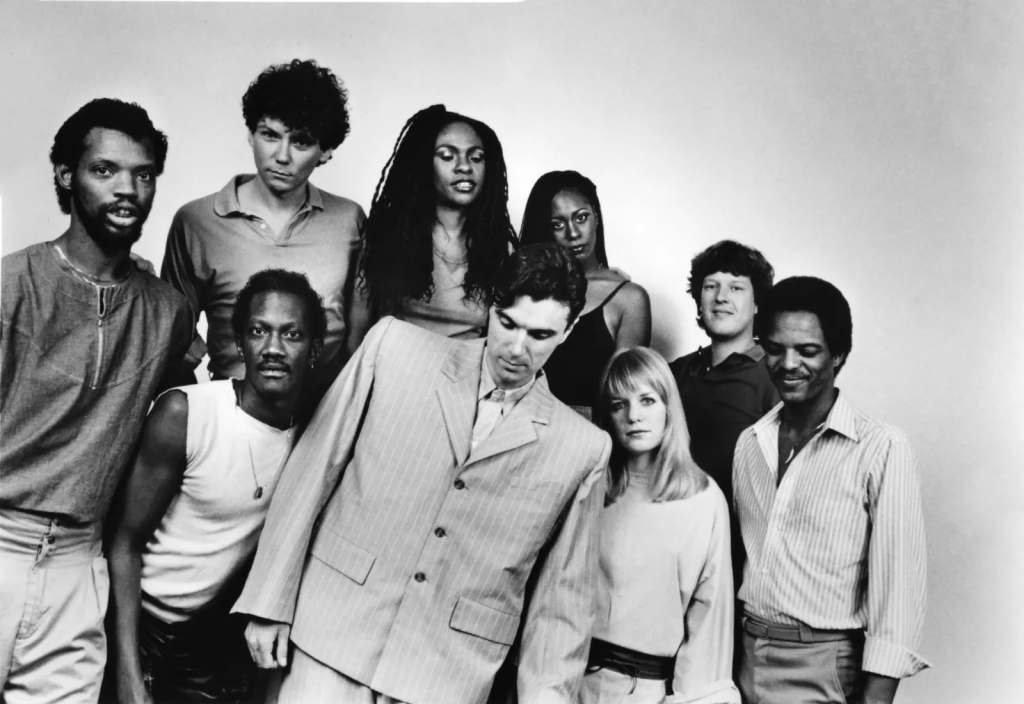
Musically, the track reflects that same sense of controlled instability. Built on layered percussion, looping guitar patterns, and interlocking rhythms, it feels constantly in motion without ever fully resolving. Every element repeats, shifts, and overlaps, creating a sound that is both hypnotic and slightly off-balance.
Byrne’s vocal performance sits at the center of this structure like a guiding force. His delivery is animated, unpredictable, and theatrical, shifting between calm observation and intense questioning. It gives the song its distinctive personality — part performance art, part philosophical inquiry.
One of the most striking aspects of “Once in a Lifetime” is how it transforms ordinary imagery into something uncanny. References to houses, cars, families, and daily routines become almost surreal when placed in the context of Byrne’s delivery. What should feel familiar instead begins to feel slightly alien, as if seen from the outside for the first time.
That sense of estrangement is exactly what gives the song its lasting power. It doesn’t tell listeners what to think; instead, it disrupts the automatic way in which they might think about their own lives. In doing so, it creates a rare moment in popular music — one where rhythm and philosophy merge seamlessly.
Over time, “Once in a Lifetime” has become one of the defining songs of the late 20th century, frequently cited as a landmark in experimental rock and new wave music. Its influence can be heard in countless artists who have attempted to blend spoken word, groove-based instrumentation, and conceptual storytelling.
What makes it endure is not just its innovation, but its emotional resonance. Beneath its surreal surface lies a deeply human question — not about fame or success, but about awareness itself. About what it means to suddenly realize you are living a life you never consciously designed.
In the end, “Once in a Lifetime” is not just a song about modern existence. It is a reminder to notice it at all.
