Music History
A Song That Took Three Months To Build Four Minutes Of Escape — How Bruce Springsteen Turned “Born To Run” Into A Rock And Roll Statement
Some songs arrive quickly, almost effortlessly. Others are fought for — shaped, rebuilt, and refined until every second feels essential. “Born to Run” by Bruce Springsteen belongs firmly in the second category, a track so meticulously constructed that its final four and a half minutes took more than three months to complete.
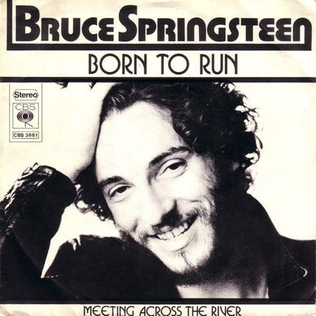
From the beginning, Springsteen approached the song with outsized ambition. He wasn’t trying to write just another rock single — he was trying to create something larger, denser, and more emotionally overwhelming than anything he had heard before. His goal, as he later explained, was simple in intention but massive in scope: to make the greatest rock record he could imagine.
That ambition shaped every layer of the recording process. Drawing inspiration from the grandeur of Phil Spector’s “Wall of Sound,” Springsteen and his collaborators built a production that was intentionally crowded and explosive. Strings, glockenspiel, multiple keyboard parts, and more than a dozen guitar tracks were layered together, creating a sound that feels constantly in motion, as if it is barely contained by the recording itself.
The result is not just a song, but a controlled collision of sound. Every instrument seems to push against the others, yet somehow locks into a unified emotional direction. That tension — between chaos and control — is what gives “Born to Run” its sense of urgency.
At its core, the song tells a story of young lovers trying to escape the limits of their surroundings. Set against the backdrop of New Jersey highways, it paints a picture of restlessness, ambition, and the desire for something beyond the confines of small-town life. But Springsteen himself has often emphasized that the exact location is less important than the feeling behind it.
For him, the geography of the song is symbolic rather than literal. Whether it takes place in New Jersey, California, or anywhere else, the emotional landscape remains the same: a place where people feel trapped and imagine freedom just beyond the horizon. That universality is what allows the song to resonate far beyond its specific setting.
The recording process itself reflected the intensity of that vision. Springsteen and his production team repeatedly reworked the track, layering and stripping elements back, searching for the right balance between grandeur and clarity. Every detail mattered — not just the notes being played, but the emotional weight each sound carried.
Unlike more stripped-down rock recordings of its era, “Born to Run” is deliberately maximalist. It builds toward something that feels almost cinematic in scale, with every musical element contributing to a sense of forward momentum. The song doesn’t simply progress — it surges.
Springsteen’s vocal performance sits at the center of that surge. He sings with a sense of urgency that mirrors the music itself, as if the words are being delivered in real time as the escape unfolds. There is both desperation and hope in his voice, capturing the emotional contradiction at the heart of the song.
Lyrically, “Born to Run” is not just about physical escape, but emotional transformation. The characters in the song are searching for something undefined — freedom, identity, or simply the possibility of a different life. That openness is part of what makes the song feel so expansive. It allows listeners to project their own meaning onto its narrative.
When the song was finally completed, the difference between intention and execution was striking. What began as an ambitious idea had become a fully realized sonic world — dense, emotional, and meticulously crafted. It was not just a recording, but a statement about what rock music could achieve when pushed to its limits.
Springsteen himself recognized the importance of the result, not just as a career milestone, but as a personal artistic breakthrough. It represented a moment where his ambition and execution aligned, producing something that matched the scale of what he had imagined.
Over time, “Born to Run” became one of the defining songs of his career, and one of the most iconic rock tracks of its era. It helped solidify his reputation as an artist capable of combining literary songwriting with large-scale musical production, without losing emotional intimacy in the process.
What makes the song endure is not just its sound, but its feeling of possibility. It captures the tension between where people are and where they want to be, turning that distance into something both painful and beautiful.
In the end, “Born to Run” is not just about escape.It is about the belief that escape might still be possible.
