Music History
The Day Funk Was Born In A Studio Edit — How James Brown Turned “Papa’s Got A Brand New Bag” Into A Musical Breakthrough
Some songs are written. Others are performed. But a rare few are engineered into history — reshaped in the studio until they become something entirely new. “Papa’s Got a Brand New Bag” by James Brown is one of those moments, a record that didn’t just reflect a shift in music — it caused it.

By mid-1965, Brown was already a major force in rhythm and blues, but he was also caught in a tense contractual battle with King Records. The label was struggling financially, and Brown’s relationship with it was becoming increasingly complicated. In that unstable moment, he made a calculated decision that would end up reshaping popular music: he delivered them a recording that felt less like a song and more like a declaration.
The track itself had been recorded months earlier, but its final form would not be defined by that initial session. When Brown turned it over, he famously shouted “This is a hit!” during the tape’s playback — a moment that captures both his confidence and his instinct for where music was headed. Even then, he knew the recording carried something new inside it.
What makes “Papa’s Got a Brand New Bag” so revolutionary is not just its sound, but its structure — or rather, its deliberate breaking of structure. The groove is built around space as much as sound, with silence becoming an active part of the rhythm. Instead of filling every moment, the music leaves room for anticipation, tension, and release.
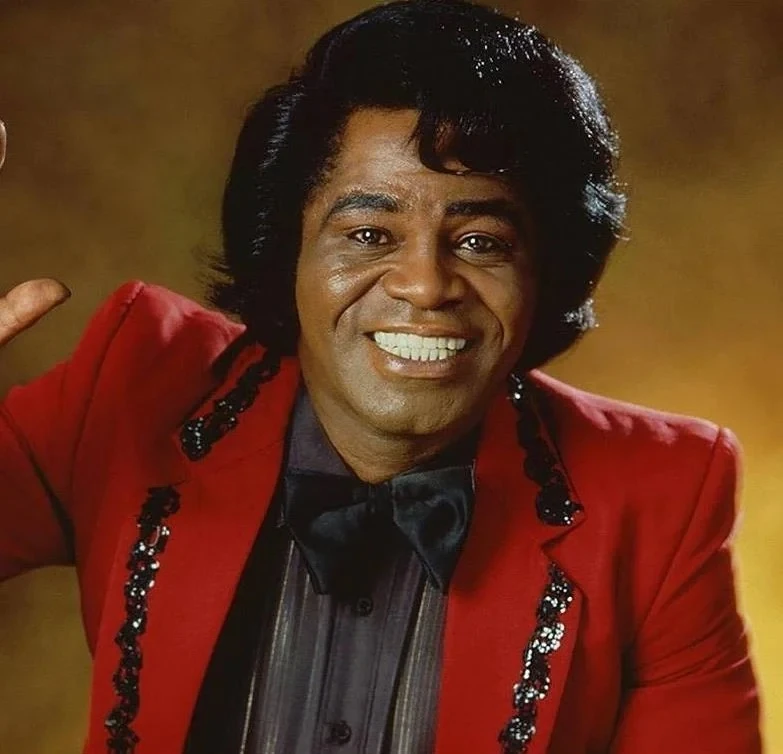
At the center of that rhythm is Brown’s vocal performance, sharp and percussive, almost like another drum in the arrangement. He doesn’t simply sing over the beat — he locks into it, pushing and pulling against the instrumentation in a way that feels physically kinetic. Every phrase is timed with precision, turning language into rhythm.
Equally essential is guitarist Jimmy Nolen, whose signature “chicken scratch” style adds a tight, clipped texture to the groove. Rather than carrying melody in a traditional sense, the guitar functions as a rhythmic instrument, reinforcing the song’s focus on percussive energy and syncopation. Together with the horns and drums, it creates a tightly wound sonic environment where every sound has purpose.
In many ways, this track is often cited as one of the earliest true funk recordings — not because it abandons melody, but because it reorganizes the priorities of popular music. Rhythm becomes the driving force. Everything else is secondary. That shift would go on to influence generations of musicians across funk, soul, hip-hop, and beyond.
He also adjusted the tempo slightly, speeding the track just enough to heighten its urgency. The result is a feeling of constant forward motion, as if the song is always on the verge of tipping over into something even more intense. It doesn’t sit still — it drives.
When it was released, “Papa’s Got a Brand New Bag” didn’t just succeed commercially; it redefined expectations. It felt modern in a way that few recordings of its time did, almost like a broadcast from the future. The combination of rhythmic innovation, studio manipulation, and raw performance energy created something that listeners hadn’t quite heard before.
What makes the song endure is its sense of invention. It doesn’t rely on traditional storytelling or lyrical depth in the conventional sense. Instead, it builds meaning through motion — through groove, repetition, and controlled intensity. It is music designed to be felt first, and understood later.
Over time, its influence became impossible to ignore. The rhythmic blueprint Brown helped establish would become foundational for funk music and deeply embedded in the DNA of hip-hop and modern pop production. Its emphasis on the “one,” on tight rhythmic interplay, and on space as structure all trace back to this moment.
In the end, “Papa’s Got a Brand New Bag” is more than a hit record. It is a turning point — the moment when rhythm stopped supporting music and started leading it. And once it started, popular music never moved the same way again.
