Music History
This Cover Was So Powerful That Even Bob Dylan Changed His Own Song
Most cover songs live in the shadow of the original. No matter how talented the artist, listeners inevitably compare them to the version that came first. But every once in a while, a cover does something extraordinary — it doesn’t simply reinterpret a song, it redefines it. “All Along the Watchtower” by The Jimi Hendrix Experience is one of those rare cases, a recording so transformative that even the song’s original creator would eventually adopt its ideas.
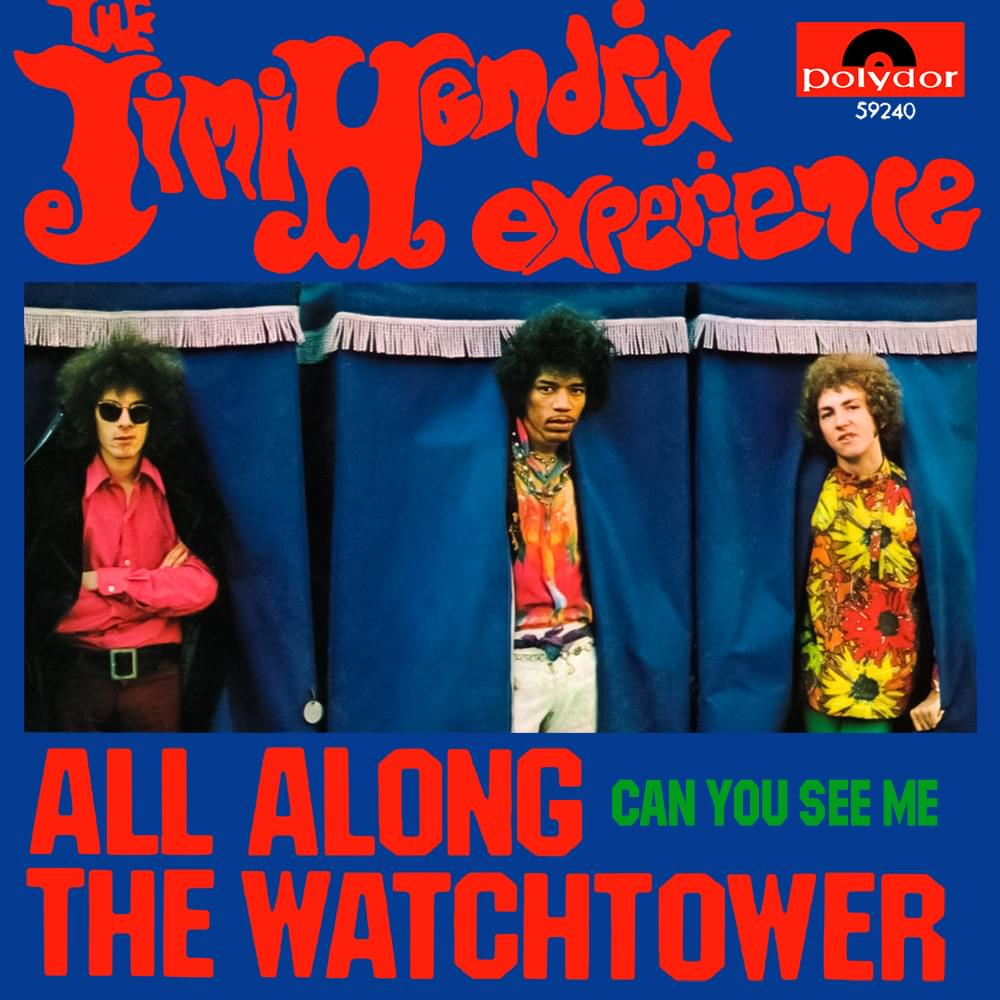
The story began in late 1967 when Bob Dylan released John Wesley Harding, an album filled with mysterious imagery, sparse arrangements, and cryptic storytelling. Among its tracks was “All Along the Watchtower,” a compact and haunting song built around a conversation between a joker and a thief, unfolding against a backdrop of uncertainty and impending change.
Dylan’s original version was striking in its simplicity. The arrangement was restrained, almost skeletal, allowing the lyrics and atmosphere to carry the song’s emotional weight. It felt like a warning whispered in the dark — unsettling, poetic, and deliberately unresolved. But when Jimi Hendrix heard the song, he saw something else inside it.
In January 1968, only months after Dylan’s release, Hendrix brought the track into the studio and began experimenting with it. Working in New York, he approached the song not as a finished piece of music, but as a foundation for something larger. He was particularly drawn to one line near the song’s conclusion: “And the wind began to howl.” For Hendrix, those words suggested movement, chaos, and intensity — emotions that would shape everything that followed.
What emerged was not merely a cover but a complete reinvention. Where Dylan’s version felt restrained, Hendrix’s exploded with energy. The acoustic folk framework was replaced by layers of electric guitars, thunderous rhythms, and a sense of escalating tension that seemed to build from the first note to the last.
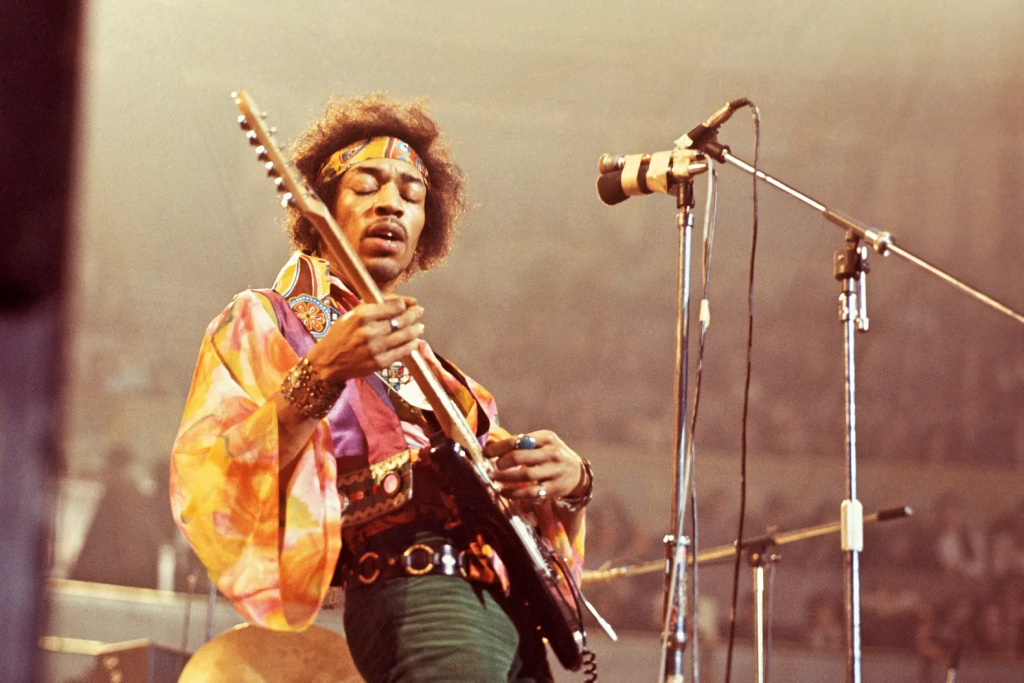
At the center of that transformation was Hendrix’s guitar work. Rather than treating the instrument as accompaniment, he used it as a storytelling device. His solos do not simply decorate the song; they expand its emotional universe. Each phrase pushes the narrative further, creating the feeling of a storm gathering on the horizon before finally breaking loose.
The recording’s most celebrated feature is Hendrix’s multi-part guitar solo, a sequence that transforms Dylan’s enigmatic lyrics into something cinematic. The guitar cries, surges, and spirals through the arrangement, turning the song’s atmosphere of quiet foreboding into a full-scale electric hurricane. It is one of the most iconic performances in rock history, not because of its technical complexity alone, but because of its emotional impact.
When the song was released, it quickly became one of Hendrix’s defining recordings. For many listeners, it became difficult to separate the song from his interpretation. The cover was so successful that countless people assumed Hendrix had written it himself, a testament to how completely he made the material his own.
Perhaps the greatest endorsement came from Dylan himself. Rather than resisting Hendrix’s version, he embraced it. In later years, Dylan frequently performed “All Along the Watchtower” in arrangements that borrowed heavily from Hendrix’s recording. Live performances, including those on his 1974 reunion tour with the Band and the album Before the Flood, reflected the influence of Hendrix’s reinterpretation.
That kind of reversal is almost unheard of in popular music. Songwriters are rarely overshadowed by those who cover their work, and even more rarely do they adopt the cover artist’s approach as the definitive version. Yet Dylan openly acknowledged what Hendrix had accomplished. He understood that the guitarist had uncovered something hidden inside the song and brought it to the surface.
More than half a century later, “All Along the Watchtower” remains one of the greatest examples of artistic reinvention ever recorded. It demonstrates that a song can be both faithful and revolutionary at the same time — honoring its source while transcending it.
The recording also captures everything that made Hendrix unique. His ability to hear possibilities where others heard limitations, his willingness to push familiar material into unexplored territory, and his extraordinary gift for turning sound into emotion are all present in every second of the track.
In the end, Hendrix didn’t just cover “All Along the Watchtower.” He revealed a version of the song that even its creator hadn’t fully imagined. And once the world heard it, there was no going back.

Bruce Ugiomoh
July 7, 2026 at 8:07 pm
Awesomely celestial!