Music History
This Song Was Born From A Chance Encounter At The Berlin Wall — And Became One Of David Bowie’s Most Powerful Anthems
Some songs are carefully engineered in the studio. Others feel like they arrive fully formed from somewhere else entirely. David Bowie’s “Heroes” sits somewhere in between those worlds — a song shaped by experimentation, emotional exhaustion, and a single fleeting moment of human connection in one of the most divided cities in history.
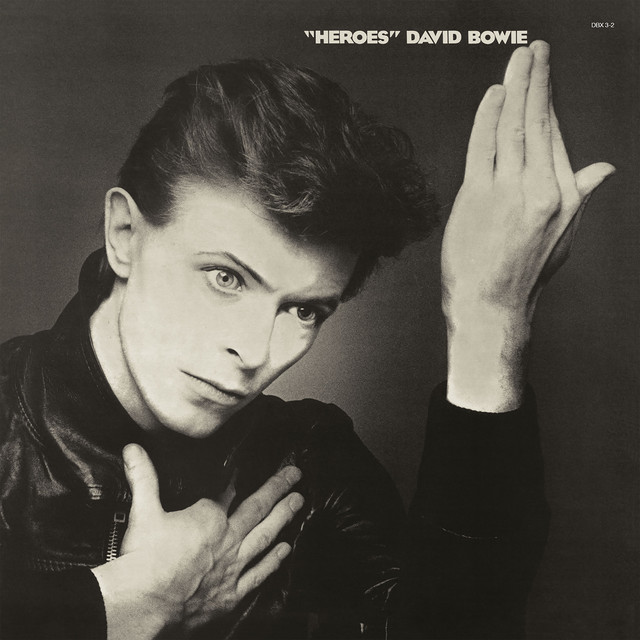
In the late 1970s, Bowie was living in Berlin, a city still defined by the Cold War and the brutal physical reality of the Berlin Wall. He had moved there partly to escape the chaos of his life in Los Angeles, where addiction and excess had taken their toll.
Berlin offered something different: anonymity, discipline, and a strange kind of creative clarity. It was in this atmosphere of recovery and observation that “Heroes” began to take shape.
The inspiration for the song came from a brief but striking image. While in Berlin, Bowie noticed two lovers meeting near the Berlin Wall. It was an ordinary human moment placed in an extraordinary setting — intimacy unfolding under watchtowers and barbed wire. He later reflected on how strange and beautiful it was that people could still find each other in a place built to keep people apart. That contradiction became the emotional core of the song.
Rather than inventing a fictional narrative, Bowie built “Heroes” around that single observation. The idea wasn’t about grand victory or political revolution. It was about something smaller and more fragile: two people stealing a moment of love in the shadow of division. That quiet defiance — the ability to feel something human in an inhuman space — became the heart of the track.
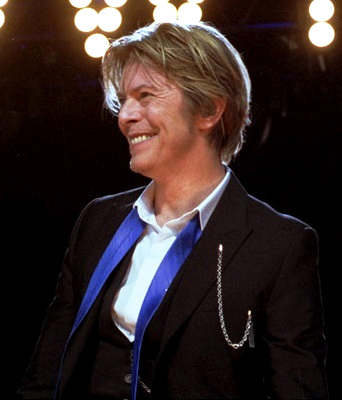
Musically, the song developed and evolved from Bowie’s highly experimental work during his influential Berlin period. Working closely in collaboration with Brian Eno, he started to create and build complex soundscapes that were intentionally less structured and more abstract than conventional rock songs typically are.
Instead of clean, predictable arrangements, they leaned into atmosphere, repetition, and emotional texture. The result was a track that feels like it is constantly building, never quite settling, always reaching for something just out of grasp.
The recording itself was deeply layered and unconventional. The rhythm is steady and hypnotic, while the synth work hums like distant machinery. Guitarist Robert Fripp contributed piercing, sustained guitar lines that cut through the mix like static electricity.
Even producer Tony Visconti added to the texture in an unorthodox way, famously creating percussive sounds by striking objects in the studio — including a metal ashtray — to give the track a raw, human edge within its electronic framework.

At the center of it all is Bowie’s vocal performance, which moves from restrained observation to full emotional release. He doesn’t sing “Heroes” as a distant narrator. He sings it as someone fully inside the moment, as if he is both witnessing and participating in the scene at once. His voice cracks and builds with intensity, reflecting the emotional contradiction at the core of the song: fragility and strength existing at the same time.
Lyrically, the song is deceptively simple. It does not rely on complex storytelling or dense imagery. Instead, it repeats and emphasizes a central idea — that two people can be “heroes” even if only for a moment.
That idea becomes more powerful with repetition, gradually transforming from a personal observation into something universal. It suggests that heroism doesn’t always come from grand actions, but sometimes from simply choosing connection in a divided world.
When “Heroes” was released in 1977, it did not immediately dominate the charts in the way some expected. But over time, its reputation grew steadily. It became one of Bowie’s defining songs, a centerpiece of his live performances, and a track that seemed to gain more meaning with each passing year. Its emotional weight only deepened as it became associated with moments of political change, personal resilience, and collective hope.
Part of what makes the song so enduring is its ambiguity. It is not strictly optimistic, nor is it purely tragic. The lovers in the song are not guaranteed happiness or survival. Their moment is brief, almost fragile, yet it is still meaningful. That tension — between hope and impermanence — gives the song its lasting emotional resonance.
Unlike many rock anthems of its time, “Heroes” does not rely on resolution. It exists in motion, always building, never fully concluding. Even its famous climax feels less like an ending and more like an emotional peak suspended in time. That structure mirrors the idea behind the lyrics: that moments of beauty and courage can exist even in unstable or temporary conditions.
Over the decades, “Heroes” has become one of the most recognizable and frequently performed songs in Bowie’s catalog. It has been used in films, political events, and memorials, often chosen for its ability to capture both vulnerability and strength in a single emotional gesture. Few songs manage to balance those qualities so effectively without becoming sentimental.
Today, “Heroes” stands not just as a product of its time, but as something that transcends it. It reflects a specific moment in Cold War Berlin, yet it continues to speak to anyone who has ever experienced separation, longing, or brief moments of connection in difficult circumstances.
It is not just a song about heroes. It is a song about what it means to be human, even when the world tries to divide you. And sometimes, that only has to last for one day.
